Vehicle Inspection Pleasant Hill TN: What Experienced Mechanics Look For to Prevent Costly Repairs
Living and driving in Pleasant Hill, TN means relying on your vehicle every single day. Whether you’re commuting to work, running errands around town, or heading out on longer rural drives, your car has to be dependable. When something goes wrong unexpectedly, it’s more than an inconvenience it disrupts your schedule and your peace of mind.
At Jenkins Car Care, we see this firsthand. Drivers often come to us after being told their car “looks fine,” only to experience a major problem weeks later. That’s because many people are given quick, surface-level inspections that miss what’s really going on underneath. A proper vehicle inspection should be one of the most detailed and valuable services you receive as a vehicle owner.
As a locally owned shop serving Pleasant Hill, TN, inspections are a core part of how we take care of our community. We’ve built our reputation on being thorough, honest, and transparent, because a real inspection is how small concerns get addressed before they turn into breakdowns, safety risks, or expensive repairs. Our ASE-certified technicians approach every inspection with the mindset that we’re looking out for our neighbors, not just checking boxes.
A good inspection isn’t about selling repairs or creating pressure. It’s about understanding the condition of your vehicle, explaining what we’re seeing in plain language, and helping you plan ahead with confidence. That philosophy shapes every inspection we perform.
Below, we’ll walk through what a real vehicle inspection should catch, and the things most drivers never realize are being overlooked until it’s too late.
Why Most Vehicle Inspections Miss Critical Problems
Not all inspections are created equal. In our shop, we regularly see vehicles that were “recently inspected” somewhere else, yet still have serious issues developing under the surface. Most of the time, this isn’t because anyone was intentionally cutting corners. It’s because the inspection was rushed, treated as a basic checklist, or performed without the experience needed to spot early warning signs.
Modern vehicles are far more complex than they were even a decade ago. Many problems develop quietly. A warning light may not be on yet. A noise may only occur under certain driving conditions. A component may be wearing unevenly but hasn’t reached the point of failure. Without taking the time to look closely, these issues are easy to miss.
A thorough inspection requires more than a visual glance. It takes hands-on testing, proper diagnostic equipment, and an understanding of how small issues typically progress into major repairs. As ASE-certified technicians, we rely heavily on patterns we’ve seen after inspecting hundreds of vehicles in real-world conditions. That experience allows us to identify concerns early and explain what they mean for your safety and reliability, rather than simply confirming what’s already broken. Over time, you start to recognize the small signs that point to larger issues ahead, and those are the details that make the difference between routine maintenance and an unexpected breakdown.
Pro Tip from the Shop: If an inspection feels rushed or you aren’t shown what was checked, it’s worth asking questions. A proper inspection should always come with clear explanations, not just a pass-or-fail answer.
Suspension and Steering Issues Drivers Rarely Notice
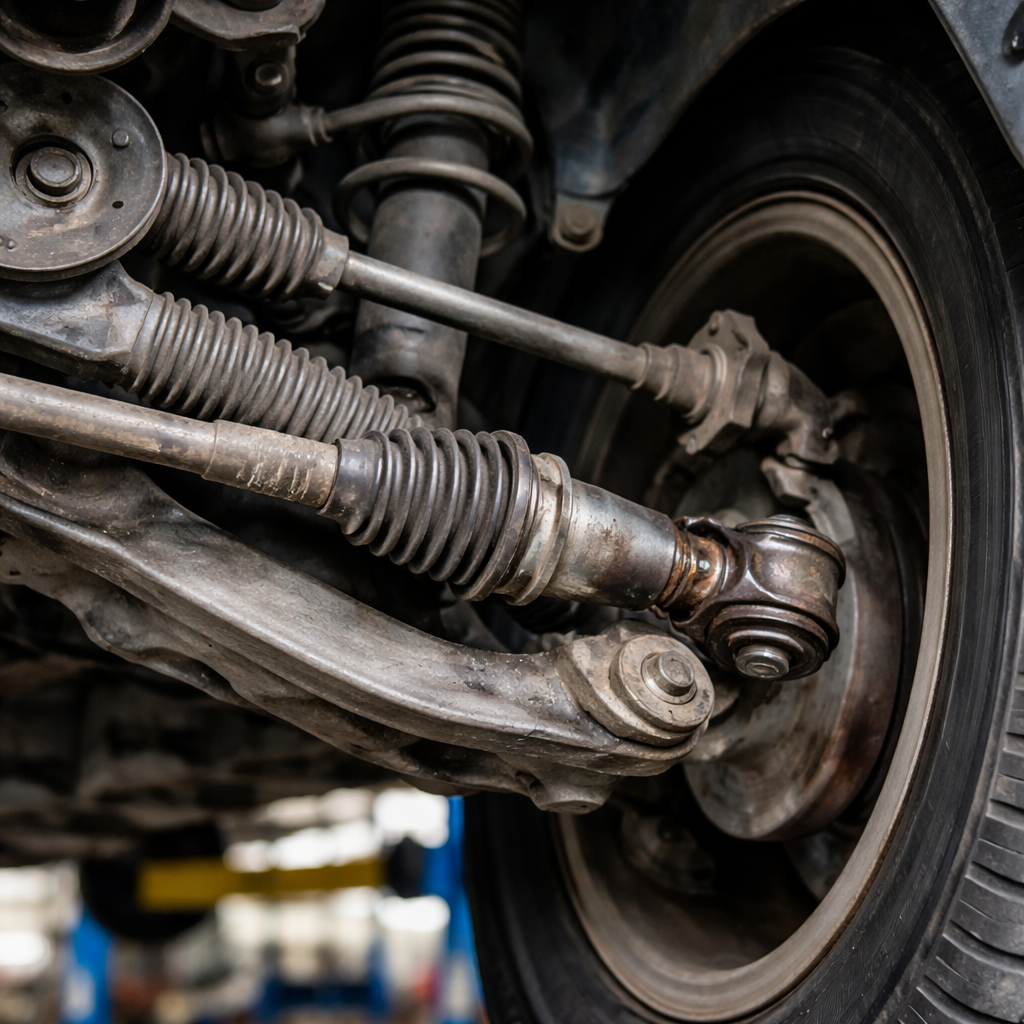
Suspension and steering problems are some of the most commonly missed issues during basic inspections. Many drivers assume that if the vehicle drives straight, doesn’t pull, and isn’t making noise, everything must be fine. Unfortunately, suspension components often wear gradually, long before the handling feels noticeably unsafe.
In our Pleasant Hill shop, we routinely find ball joints that are starting to loosen without making noise, tie rods that only show excessive play when the vehicle is under load, and shocks or struts that have lost their ability to control movement even though they aren’t leaking. These conditions may seem minor at first, but they can significantly affect braking performance, tire wear, and overall vehicle stability.
Over time, ignored suspension and steering wear can also place additional stress on other components, leading to more extensive repairs. We often see premature tire wear, increased strain on steering systems, and reduced ride comfort that drivers slowly adapt to without realizing something is wrong.
Pro Tip from the Shop: Uneven tire wear is often one of the earliest clues that suspension or steering components are wearing out. Even if the car feels fine, visible wear patterns can tell a much bigger story. A professional inspection looks for subtle movement, wear patterns, and changes in ride control that indicate a problem is developing. When customers ask how these parts work together, we often walk them through it during a professional vehicle inspection in Pleasant Hill, TN so they understand what we’re seeing and why it matters for long-term safety.
Brake Problems That Don’t Show Up on a Test Drive
Brakes are another area where serious problems can hide in plain sight. A short test drive may feel completely normal, but that alone doesn’t tell the full story of the braking system.
During detailed inspections, we often find brake pads wearing unevenly between the inner and outer surfaces, calipers that are beginning to stick, brake hoses that are weakening internally, and rotors that are worn below specifications without yet causing vibration or noise. These issues don’t always trigger warning lights, but they can reduce braking effectiveness and increase stopping distances.
Brake problems also tend to compound over time. A sticking caliper can overheat a rotor. Uneven pad wear can lead to premature brake failure. In many cases, what starts as a simple adjustment or component replacement turns into a much larger repair because the early warning signs were missed.
Pro Tip from the Shop: If you notice a burning smell after driving or one wheel producing more brake dust than the others, those are signs worth having inspected sooner rather than later. A sticking caliper can overheat a rotor. Uneven pad wear can lead to premature brake failure. As mechanics, we don’t just measure parts, we evaluate how and why they’re wearing so we can address the root cause. This level of inspection is especially important for drivers who commute daily, tow trailers, or drive rural roads around Pleasant Hill, where dependable braking is critical.
Electrical and Diagnostic Red Flags Most Shops Overlook
Modern vehicles rely heavily on electrical systems and computer-controlled components. One of the most common statements we hear from drivers is, “There’s no warning light on, so everything must be fine.” Unfortunately, many electrical and diagnostic issues develop long before a light appears on the dashboard.
During professional inspections, we frequently find pending trouble codes, sensors that are providing inaccurate data, batteries or charging systems that are starting to weaken, and electrical connections that are slowly corroding or loosening. Left unchecked, these issues can eventually lead to drivability problems, no-start situations, or unexpected warning lights.
Our diagnostic inspections go far beyond simply reading codes. We analyze live data, monitor system behavior, and compare results against real-world failure patterns we’ve encountered over years of hands-on work. Anyone can plug in a scanner, but knowing what should look normal, and what doesn’t, comes from experience. Electrical and diagnostic issues are some of the most misunderstood problems we see, and they often require patience and methodical testing to diagnose correctly.
Pro Tip from the Shop: Intermittent electrical issues are usually easier and less expensive to diagnose when they’re addressed early, before they become constant failures. If you’d like to understand how diagnostics fit into overall vehicle care, you can learn more about our auto repair and diagnostic services and how they support long-term vehicle reliability.
Preventative Issues That Save You Money When Caught Early
Some of the most valuable inspection findings aren’t urgent repairs. They’re early warnings that allow you to plan ahead rather than react later.
In our shop, we commonly identify minor fluid seepage before it turns into a major leak, engine or transmission mounts that are starting to deteriorate, exhaust components that are weakening, and tire wear patterns that indicate suspension or alignment concerns. Addressing these issues early can often prevent more serious damage and significantly reduce long-term repair costs.
We believe preventative inspections give drivers control. Instead of being surprised by a breakdown or major repair, you’re able to prioritize maintenance based on safety, budget, and timing. This approach also helps extend the overall life of your vehicle and improves reliability over the long term.
Pro Tip from the Shop: Keeping a simple maintenance and inspection history can help your mechanic spot patterns faster and make more accurate recommendations. Instead of being surprised by a breakdown or major repair, you’re able to prioritize maintenance based on safety, budget, and timing. Pro Tip from the Shop: if an inspection reveals something that isn’t critical yet, ask when it should be addressed and what could happen if it’s ignored. A trustworthy mechanic should be able to explain both clearly, without pressure or scare tactics.
FAQs: What Drivers in Pleasant Hill Ask Us About Inspections
How often should I get a professional vehicle inspection?
For most drivers, once a year is a good baseline. If your vehicle has higher mileage or sees a lot of use, more frequent inspections can help catch problems early.
Is a professional inspection the same as a state inspection?
No. State inspections focus on compliance requirements. A professional inspection focuses on safety, reliability, and preventing unexpected breakdowns.
Can inspections really prevent breakdowns?
Yes. Many major repairs we handle started as small, detectable issues that were either ignored or missed during earlier inspections.
For additional safety information related to vehicle maintenance and inspections, guidance from the National Highway Traffic Safety Administration vehicle inspection and safety guidance can help drivers better understand why regular inspections matter.
Schedule a Professional Inspection You Can Trust
A good vehicle inspection should leave you feeling informed and confident, not confused. At Jenkins Car Care, we take the time to explain what we find, why it matters, and what your options are. Our ASE-certified technicians specialize in thorough inspections, diagnostics, brakes, suspension, and general repair for drivers in Pleasant Hill, TN.
If you’ve been putting off an inspection or just want a second opinion from a local shop you can trust, now is the time to schedule one. Catching issues early is one of the smartest ways to protect your vehicle and avoid unexpected repairs.
To schedule a professional inspection, give us a call at 615-696-9946 or visit our contact page to book an appointment. We’re here to help you stay ahead of problems, protect your investment, and drive with confidence, before small issues turn into big ones.